Home › Commercial Concrete Contractor Services
Partner with a dependable commercial concrete contractor in Fort Smith, AR for your building and site projects. We handle flatwork, foundations, paving, and site concrete for developers, GCs, and facility owners with clear communication and consistent quality.
Superior Concrete Fort Smith provides professional commercial concrete contractor throughout Fort Smith, AR, Arkansas and the surrounding area. Our licensed, insured crew delivers safe, clean, on-time work with a free estimate before anything begins. Call 479 346 0698 or request your free quote.
Commercial Concrete Built for Fort Smith Businesses
Superior Concrete Fort Smith focuses on concrete that works as hard as your operation does. Our commercial concrete contractor services are built around the way businesses in Fort Smith actually use their properties: forklifts on loading docks, constant traffic in drive lanes, heavy racks in warehouses, and delivery trucks turning on tight radiuses.
On every project we start by walking the site with you. We look at where heavy loads will sit, where water currently collects, how delivery traffic moves, and how close we are to existing buildings or utilities. For an existing slab, we check for cracking, spalling, joint failure, and signs of subgrade movement. For new concrete, we ask about future expansion so we can plan joints, thickened edges, and conduit sleeves in the right places.
Fort Smith’s temperature swings, summer heat, and occasional freeze-thaw cycles are a big deal for commercial concrete. We select mixes and joint layouts that are realistic for our climate instead of just following a generic spec. That means paying attention to curing time in hot months, using proper control joint spacing, and planning pours around real weather patterns so your slab does not crack or scale prematurely.
Types of Commercial Concrete Projects We Handle
Our team handles a wide range of commercial concrete work across Fort Smith and the River Valley. For many local clients the most critical areas are parking lots and drive lanes. Here, we design pavement thickness and reinforcement based on traffic counts and the number of heavy trucks, not just car traffic. A small retail center may get a different section than a warehouse with daily semi traffic.
We also pour and repair warehouse and shop floors. These typically need tighter flatness and levelness, especially where pallet racks, narrow-aisle forklifts, or machinery are involved. In those spaces, we pay special attention to joint type and layout to reduce forklift bumping and edge chipping. Options include doweled joints, early-entry saw cutting, and joint fillers that can stand up to constant wheeled traffic.
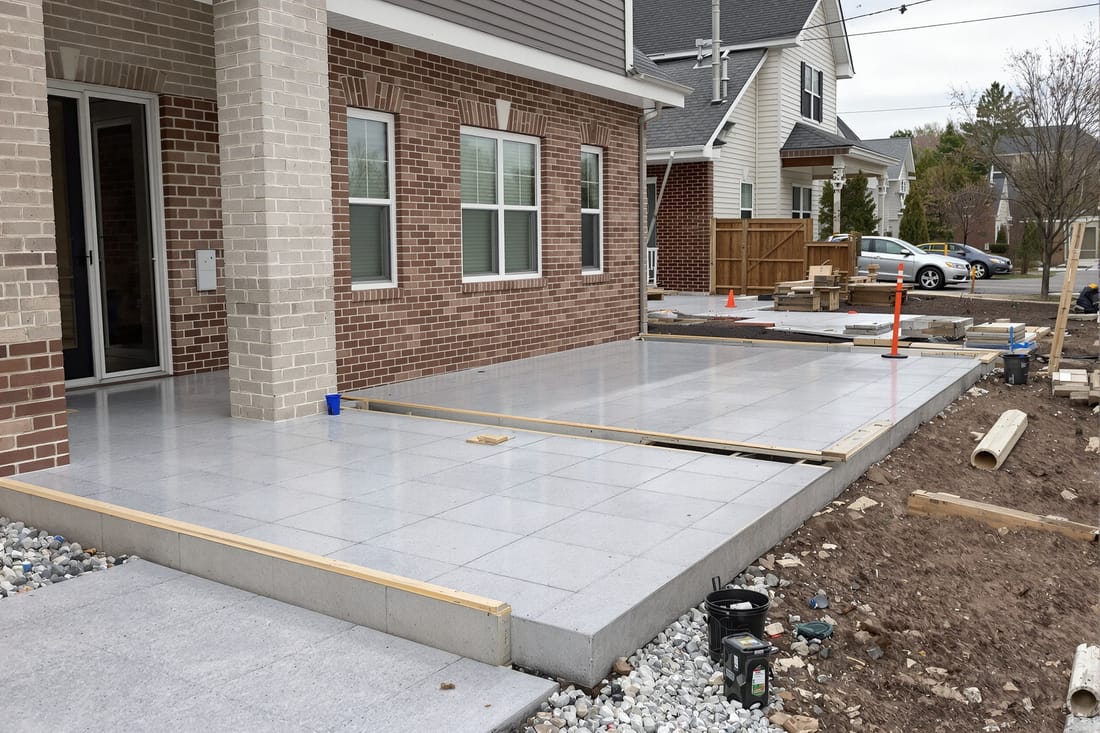
Other common projects include loading docks, dumpster pads, equipment pads, ADA-compliant ramps and walkways, and reinforced slabs for generators or HVAC units. For restaurants and offices we build patios and outdoor seating areas that tie into existing entries without creating trip hazards or drainage headaches. Because we work primarily in Fort Smith, we are familiar with local inspectors, typical plan review comments, and what they expect to see on a commercial concrete project.
How the Commercial Concrete Process Works
When you contact Superior Concrete Fort Smith for commercial work, we start with a site visit and fact-finding. We review any plans or civil drawings you have, then verify on site that grades, utilities, and existing structures match what is on paper. If you do not have full drawings, we measure, shoot grades if needed, and talk through how your business uses the space so we can recommend thickness, reinforcement, and joint spacing.
Next, we provide a written scope that spells out square footage, slab sections, reinforcement type (rebar or wire mesh), concrete strength (PSI), and any special finishes such as broom, trowel, or non-slip texture. This is where we also outline curing requirements and traffic restrictions so you know exactly when you can put foot traffic, pallet jacks, or full truck loads on the new slab.
During construction, the first critical step is subgrade preparation. For commercial slabs we usually compact the base in layers with a plate compactor or roller and add aggregate base if existing soil is soft or holds water. In certain Fort Smith areas with clay-heavy soil, we often recommend a thicker crushed rock base or underdrain to prevent pumping and slab settlement.
Formwork is set to finished elevations, then reinforcement is placed per plan. We tie rebar or lay wire mesh on chairs so it stays in the middle of the slab, not at the bottom where it does little good. Concrete is ordered with the specified mix design and scheduled for a time that fits both production needs and weather, avoiding late-day pours in extreme summer heat where finishing and curing can suffer.
After placement, we strike off and bull float, then finish according to the use. Parking and drives usually get a broom finish for traction. Interior commercial floors may get a hard trowel or machine finish. We cut control joints at the correct spacing and depth based on slab thickness, often using early-entry saws to reduce random cracking. Finally, we cure the slab with curing compound or wet curing methods, which is especially important in Arkansas summers where rapid moisture loss can cause shrinkage cracks.
Cost Factors and Practical Choices for Fort Smith Properties
Commercial concrete cost is driven by far more than just square footage. Thickness is usually the first big factor: a 4 inch light duty slab costs much less per square foot than a 6 inch or 8 inch slab designed for truck traffic or heavy equipment. We help clients choose realistic sections based on actual loads and usage instead of simply defaulting to the cheapest option that can lead to early failures.
Reinforcement type and layout are another major cost component. Simple drive lanes with light traffic may do fine with wire mesh, while loading areas, dumpster pads, or dock aprons usually get rebar grids, dowels to tie into existing concrete, or thickened edges. Concrete mix design also affects price. Higher PSI mixes or air-entrained concrete for exterior slabs that see freeze-thaw will cost more up front but reduce repair costs.
Access and phasing matter as well. If we can get trucks close to the pour area and schedule work in large sections, costs are lower. If your operation requires night pours, hand-carrying or pumping concrete long distances, or tight multi-phase work to keep the business open, labor and equipment time go up. We are straightforward about these factors in our proposals so you understand what you are paying for.
Fort Smith’s weather also plays into scheduling and cost. In hot months we may recommend early morning pours and additional curing measures. In colder spells we may need to use warm water, adjust set times, or protect fresh concrete from freezing. These steps protect your investment and are accounted for in the pricing so there are no surprise add-ons later.
Where budgets are tight, we often break work into phases, starting with the most critical structural areas like loading docks or main entrances, then addressing less critical pavement later. We can also discuss finish options that maintain performance but save money, for example a standard broom finish instead of decorative stamping in back-of-house areas.
Common Problems, Repairs, and How We Prevent Them
Most of the commercial concrete repair work we do in Fort Smith traces back to three issues: poor base preparation, lack of joints or incorrectly spaced joints, and neglecting drainage. When we repair failed slabs or broken dock areas we often find thin sections over soft, wet soil with little compaction. To fix those, we remove the bad concrete, correct the base with proper compaction and drainage, then repour with the right section and joint layout.
For cracked or settled areas that cannot be fully replaced right away, we offer patching, partial-depth repairs, and in some cases slab stabilization. We are candid about when a patch is a short-term fix versus when full replacement is the only sensible option. Businesses appreciate knowing whether a repair is meant to buy a couple of years or provide a long-term solution.
Joint failure is another frequent issue. Forklift wheels and truck tires can destroy poorly constructed joints. To prevent that, we use proper dowels where slabs meet, saw joints at the correct depth, and recommend joint fillers appropriate for the traffic type. In warehouses we often use semi-rigid joint fillers that support wheels and reduce chipping.
Water problems show up as heaving, settlement, or peeling surfaces. In Fort Smith, heavy rains can expose grade issues fast. We address this by setting accurate slopes to inlets or edges, adding drain lines or inlets where necessary, and avoiding low spots that become birdbaths. In existing sites we may saw-cut relief drains or add trench drains to redirect water off the slab.
By planning ahead for loads, joints, and drainage, Superior Concrete Fort Smith focuses on commercial concrete that holds up under real-world use instead of just looking good on pour day.